The Missing Layer in Supply Chain Transformation: Lessons from Boston and Pittsburgh
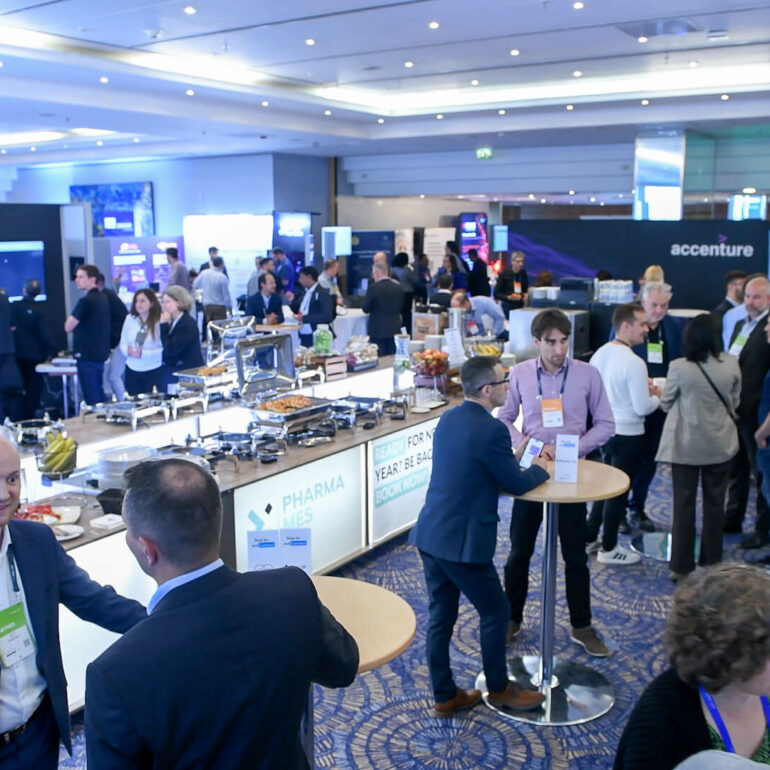
Sarah recently spent time in the US attending The Manufacturing IT & OT Summit in Boston, followed by a series of visits across Pittsburgh’s manufacturing and innovation ecosystem.
She went expecting to hear a lot about AI, and she did just not in the way you might think.
What stood out wasn’t the hype or the big future-facing ideas. It was something much more grounded. The conversation has shifted. Leaders aren’t asking what AI could do anymore, they’re asking what actually works when you’re dealing with real suppliers, real delays and real operational pressure.
For most organisations, the issue isn’t access to data, it’s the gap between insight and execution.
Spend any time in supply chain, procurement or operations and you’ll recognise it straight away.
There’s no shortage of data. In fact, most teams are surrounded by it. ERP systems, supplier updates, spreadsheets, emails, reports. The issue isn’t access, it’s usability.
The insight is often there but it’s buried. Disconnected across systems, owned by different teams, shared inconsistently with suppliers. By the time it’s pulled together, it’s either out of date or too late to act on.
That’s where a lot of the current AI conversation falls short. The technology is powerful, but if the foundations underneath it aren’t structured, connected and usable, it never quite delivers in the way people expect and that’s the gap many organisations are now trying to close.
One of the most interesting parts of Sarah’s trip was seeing what happens when that gap is removed.
Pittsburgh, in particular, stood out. Not just as a centre for manufacturing innovation, but as a genuinely connected ecosystem. Industry, academia, government and startups aren’t operating in silos, they’re working together, intentionally, to move ideas into real-world application.
It’s not innovation for the sake of it but innovation designed to work in practice. Quickly, collaboratively and with a clear path to implementation.
When you compare that to how most supply chains operate today, the contrast is hard to ignore.
In many organisations, teams are still chasing updates, reconciling spreadsheets, reacting to issues late and managing suppliers through fragmented communication. Visibility exists in pockets, but it’s rarely joined up and without that connection, insight doesn’t turn into action.
That’s why this idea of execution has become so important.
Because improving supply chain performance isn’t about adding more tools. It’s about making the ones you already have actually work together, connecting data, people and processes in a way that supports day-to-day decision-making, not just reporting after the fact.
That’s exactly where Valuechain sits.
Not as another system to replace what’s already there, but as the layer that connects it. Bringing together supplier performance, compliance, quality and delivery into one shared environment, so teams can see what’s happening and act on it in real time.
It’s the difference between knowing something has gone wrong and being able to do something about it early enough to change the outcome.
What also came through strongly was how consistent these challenges are, regardless of location.
Whether the conversations were happening in Boston or Pittsburgh, the themes were the same. Pressure to improve delivery performance, reduce risk and prove compliance, all against a backdrop of limited time, limited resources and increasing complexity.
However, there’s a growing recognition that solving these challenges doesn’t come from working in isolation. It comes from better coordination, better collaboration and systems that are designed around how supply chains actually operate, not how we wish they did.
That’s why there’s also a noticeable shift towards partnership. Particularly in the US, there’s a strong appetite for working with technology providers who can deliver practical, proven solutions, not just ideas.
If there’s one thing this trip reinforced, it’s that the competitive advantage is no longer about who has the most data, or even the most advanced technology. It’s about who can execute.
- Who can connect their systems.
- Who can align their teams and suppliers.
- Who can turn insight into action, consistently, as part of everyday operations.
Because insight on its own doesn’t change anything, execution does.
That’s the shift we’re seeing across the industry. Not from no data to more data, but from fragmented insight to coordinated action and the organisations that get that right won’t just keep up, they’ll pull ahead.